Earth's internal structure, tectonic plate movement and earthquakes

Earth's internal structure, tectonic plate movement and earthquakes
Topic-1
(Note: While reading, you must look at the related pictures, see the pictures and their captions. It will be very helpful to understand) -Shakil Sajjad
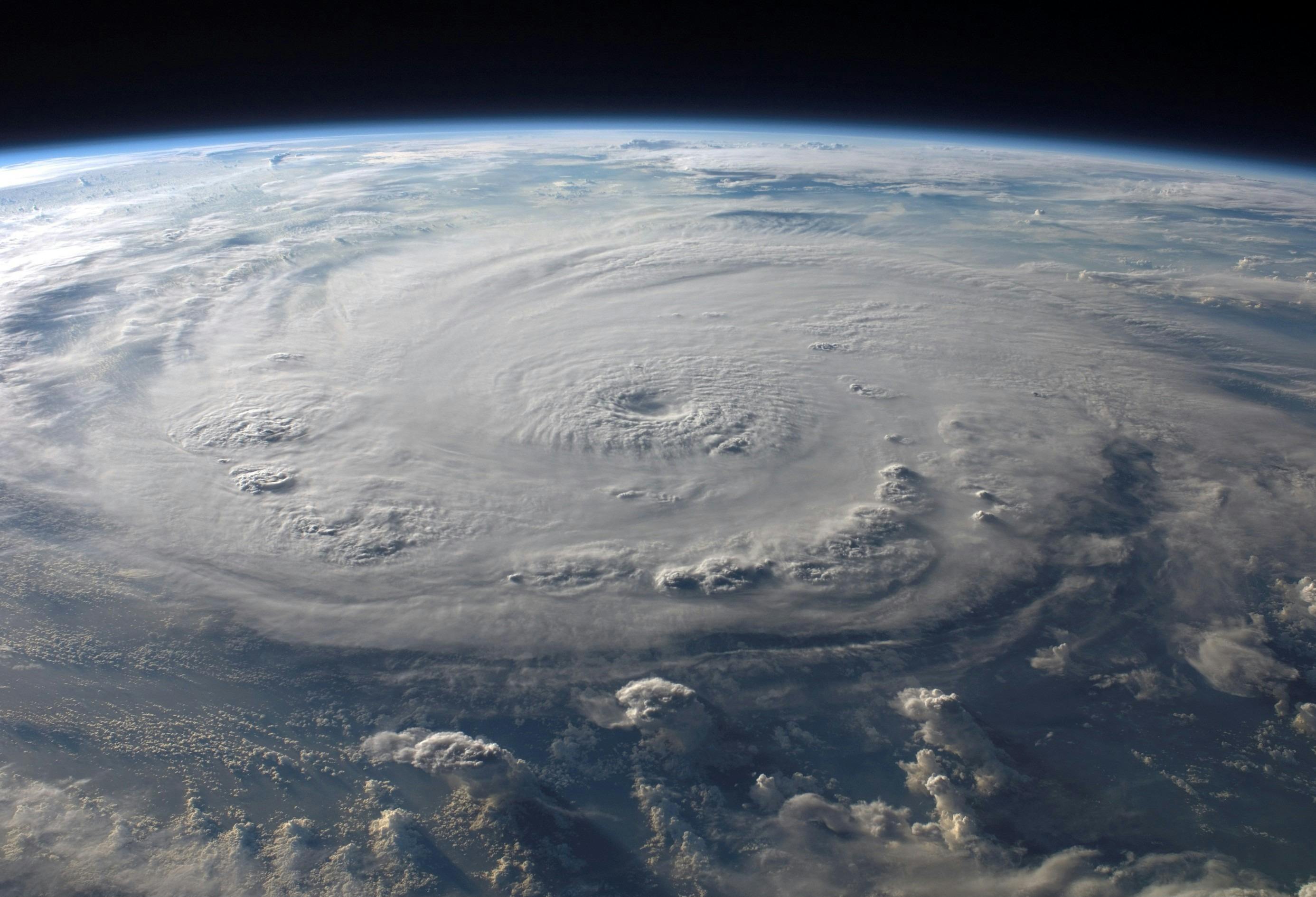
You are standing next to a pond Suddenly he saw that the water in the pond started moving. However, it is not a current, but a tilting condition. Or, sitting in a chair at home. The table is not moving. But still the water on the glass on the table is shaking, the fan on the head is shaking, the Thai / aluminum glass of the house is shaking, and you feel as if your head is spinning. Earthquake !!! - said Vo-Daur. Yes. This is an earthquake This is a phenomenon that shows us with our fingers in our eyes that we are not really anyone in the world. I don't even wait for anyone. As soon as the earthquake starts, it is seen that everyone is busy saving their lives, I don't even need to look back.
Anyway, why are earthquakes?
Simply put, the tectonic plates in the Earth's interior are constantly moving. In this motion, whenever two or more plates collide with each other, the energy generated from them spreads around in the form of waves and as a result the earth shakes - which we call Earthquake. But, what is this tectonic plate? What is their speed? Why are they moving? What is their role in creating earthquakes? - The answers to these various questions will hopefully be found in this post. However, before that we must have a clear idea about the internal structure of the earth. He will be discussed earlier. In this, we will find answers to two more unknown questions in the minds of many of us
1. What is inside the earth? Or,
2. What can be found if you go into the world?
The planet "Earth" is such a big subject that it would be easy to write two or three volume books. Anyway, let's get to the bottom of things. We can compare the world, with a football. We are on the surface of the earth, not inside Our position in the world is just like that - you spread some ants on a football We are on the surface of the earth just as they are And, the earth is like a football floating in the air, with ants on its surface. In other words, the way dirt sticks to the surface of a football, we stick to the surface of the earth. And, surely you can't see the sky from inside the house unless you go to the highest place - the open roof? In the same way, we are located on the surface of the earth, the highest place on earth.
However, if other planets, including Earth, are dissected, we will get three levels. In terms of structure we can compare the world with a cricket ball. If you look inside the cricket ball, you will find three main parts. The top is covered with leather, with a piece of cork inside and a small round piece of cork-rubber on the inside. The structure of the earth is exactly the same. (Must see Figure 3 first, then Figure 4) The outermost part is the crust, the inner mantle and the innermost core. In the case of the earth, these three levels are not known in brief
-
Crust
We can compare the crust to the outer skin of a cricket ball. It is a very thin part and very fragile. It is a thin layer of earth that covers the interior. The hardest part of the surface of any planet or object is called a crust. The thickness of the earth's crust is not the same everywhere Somewhere less, somewhere more. According to this, the thickness or depth ranges from 5 to 60 km. The thickness of the crust in the continental part is greater, about 30-50 km, which is made up of lighter matter than the oceanic crust (bottom of the ocean). On the other hand, the thickness of the crust of the oceanic part is much smaller than that, only up to 5-10 km, and is composed of relatively dense (mainly by hardened magma emitted in volcanic eruptions). The age of the crust-forming rocks is not very long, about 100 million years old, and the crust we see today is estimated to have formed 2 billion years ago. The total volume of the crust is less than 1% of the total area of the earth. The temperature of the crust increases as the depth increases. Mantle
Once inside the crust, we get the mantle layer. This layer is mainly composed of silicate rock. Its thickness is about 2900 km. This layer occupies about 6% of the total mass of the Earth and 64% of the total area of the Earth. The lower part of the crust and the upper part of the mantle - these two parts together are called lithosphere. Part of the lithosphere is made up of giant rock fragments, which are very fragile. Each of these rocks is called tectonic plates. That is, the tectonic plates we hear about are not very deep in the ground (see Figure 5, of course). They are located between the crust and mantle layers. Again, the lower part of the lithosphere is in a slightly molten state. This layer is called the asthenosphere. The lower part of the tectonic plates is at this level and this is where their mobility is maintained. The thing is, when you walk, your whole body is moving, but surely your whole body does not work, only the lower part of your body - the legs. The temperature variation in the mantle layer is quite noticeable. For example, the temperature of the part adjacent to the crust varies from 1000 ° C to about 3600 ° C in the part adjacent to the core. The mantle is again divided into several levels. Upper mantle, transition zone, lower mantle and de prime zone. The upper mantle is the upper part of the mantle - divided into lithosphere and asthenosphere as mentioned above. The depth of this zone is 810 km from the crust to the interior Then there is the transition zone from 410 to 60 km. Rocks at this level never melt or break, they are in a very dense state. It is assumed that the same amount of water has accumulated at this level as the water has accumulated in the oceans on the earth's surface. But it is not in liquid form. It is known to exist in vapor, solid and even plasma states. Then there is the lower mantle at a depth of 80 to 2600 km. This part is thicker and warmer than the upper mantle and transition zone. The R de prime zone is the lowest part of the mantle, just above the core, which surrounds it.Core
If we go deeper after the mantle, we will find the center of the earth or core 6 Its average radius is about 3460 km. The core can again be divided into two parts. The outer side of it is almost molten This part is called the outer core and the center side is relatively strong. This is called the inner core. The core of the earth is mainly iron, as well as nickel. It does not have the same temperature everywhere. The temperature varies from 4400 ° C, to 6000 ভিন্ন C, depending on the pressure difference in the different parts of the core, the material difference, and the rotation of the earth. Until, which is higher than the surface temperature of the sun. The shape of the core is similar to the shape of the earth - round. However, as much as the shape of the earth is spherical, the core is quite round. According to the calculations, the diameter of the core is 3 km less along the Earth's equator along the polar axis. Where the diameter of the earth is about 43 km less along the polar axis than the equator. Its core is also rotating with the earth However, it is a bit faster. When the earth rotates on its axis once a day, it travels 360 °. Thus, the more degrees he rotates in 1 year, the more the core rotates.
Not today, it would not be right to say more So, if we keep going to the interior of the earth, what will we get? Or what will we get if we dig from one side of the earth's surface to the other?
- First Crust> Then Mantle> Then Core. Then? Then the same thing, just the layout will be reversed, since the earth is round. That is, then reach Core> Mantle> Crust> Surface. That's all for today. The next post will talk about tectonic plate motion and earthquakes.