The creation of the continents and oceans of the earth and the evolution of the earth's surface part-1

The creation of the continents and oceans of the earth and the evolution of the earth's surface part-1
(The post is a bit long, if you read it carefully, you may find answers to many unknown questions on this topic)
The surface is the hardest part of the earth's surface. We are located on the surface of the earth, in the outer part of the earth. Being in the outer part, I can see the open sky. The total surface area of the earth is 51.12 million sq km of which 61% is divided by water and the remaining 29% by land. The land is divided into seven continents and the waters are divided into five oceans. The largest part of the landmass is occupied by Asia and the largest part of the watershed is occupied by the Pacific Ocean. The highest point on earth is the summit of Mount Everest, which is 6,848 m above sea level. The highest and deepest or lowest point is the deepest section of the Pacific Ocean, the Mariana Trench, which is 11,033 m. Deep. It is so deep that if you leave Mount Everest here, it will be completely submerged and there will be about 2 km more water on it.
There is a huge amount of ice in the north and south poles of the earth. The two poles are very cold. In winter, the average temperature of the North Pole is -34 ° C. And 0 ° C in summer. The center of the North Pole is not dry flat land. It is covered in the Arctic Ocean. And in that part of the Arctic Ocean there is a deep valley. Its depth is about 4,08 m compared to the surrounding land. On the other hand, the middle of the South Pole is quite high, 2635 m from the surface. High.
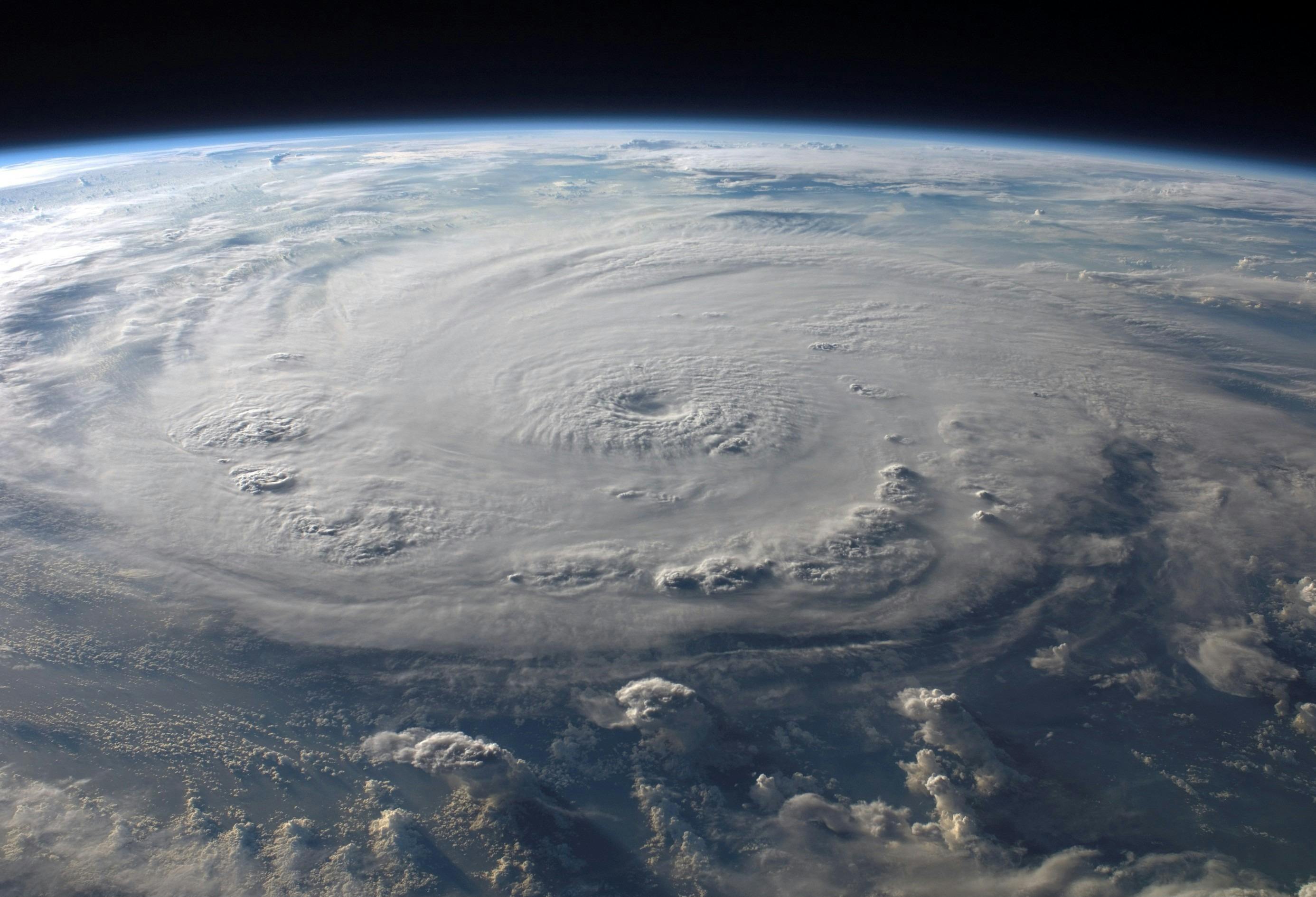
The earth's surface is not flat at all, but much higher and lower. The conditions we see in the world today have not been so direct. It has come to this stage through many complex geological and geographical changes. After the formation of the sun from the solar nebula 4.6 billion years ago today, the light gases near the sun are pushed farther away by the solar wind and the heavier matter falls closer to the sun, which later becomes a planet through gravitational contraction. One of them. At that time, the Earth collided with a large protoplanet (Thea) resembling Mars. Some of it goes inside the earth and some of it goes out and creates the moon. This causes the heavier matter to move into the earth and the lighter matter to float to the surface, which then hardens to form the earth's surface. It can be said that the core of the earth was created at first and it is thought that at the same time the earth's magnetic field was also created.
The mantle at the bottom of the crust then formed a tectonic plate, which was basically a huge rock. These are constantly moving The role of tectonic plates in changing the topography of the ancient world was very much. This is because collisions with tectonic plates and crusts would have elevated the area adjacent to the collision, which would later have led to the formation of various mountains, including volcanoes. In this way, the lava released by the volcano under the pressure of the earth's crust solidifies on the surface and plays a role in the formation of the crust surface. At the same time, the gas emitted along with the lava also plays a role in the formation of the Earth's atmosphere.
How were the oceans created?
Many comets and meteors hit the primitive earth. And the water in it falls to the surface and starts to accumulate. Again, water vapor was mixed with various molten rocks of the primitive heated earth and in the atmosphere. As the earth cools, the temperature drops below the boiling point, the water vapor slowly condenses into a liquid and falls to the earth's surface in the form of rain. Again the earth is in the habitable or goldilocks zone according to its distance from the sun. That is, it is a distance at which the temperature is not so high that water will evaporate, and not so low that it will turn to ice. And this is how the oceans of the earth create the oceans. However, the world's first ocean was not as salty as the current ocean water. Rather it was pure water.
So where did the salinity in the current sea come from?
Comes in two processes.
First, we know that rainwater is slightly acidic because of the dissolution of carbonic acid. Nitrogen, hydrogen and carbon dioxide in the atmosphere combine with water to form carbonic acid. When rain falls on a salty rock or boulder, it slowly erodes the rock. In this he dissolves the rocky salt in the water. That water then merges into the surrounding lakes, canals or rivers and finally merges into the sea water. Tiny water particles collectively bring salinity to the oceans in millions of years.
Second, the intensely heated magma emitted during volcanic eruptions from seabed craters also carries underground mineral salts, which are then mixed with seawater. In this way the sea water gradually becomes saline. About 65% of the total salt dissolved in sea water is chloride and sodium salts, 10% magnesium and sulphate and some other salts occupy the remaining 5%.
How were the continents created?
The period between the distant past, when the earth's surface is fully supported by geological changes, can be divided into four eons. Hedion, Archean, Proterozoic and Phanerozoic. Of these, the Archaic Yen lasted from 3.6 billion years ago to 2.5 billion years ago. This is how the process of creation of the continents of the world continues. In this ion, the Earth's heated crust begins to cool enough. When the Archeon ion began, the Earth radiated three times more heat than it does now.